- Home
- Smartphone
- Google Pixel 11 Pro Fold
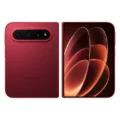
Google Pixel 11 Pro Fold
Specifications
Launch
| Announced The date when the smartphone was officially revealed by the manufacturer. This is usually before the release date and helps track when the model was introduced | 12 August, 2026 |
| Status Indicates the smartphone's availability with the latest update: 'Upcoming' (launching soon), 'Available' (currently for sale), 'Rearmed' (restocked on a specific date), and 'Stockout' (unavailable since a certain date | Available |
| Made By | US |
| Assembled in | Bangladesh |
Price
| Expected Price | ৳2,40,000 BDT |
Display
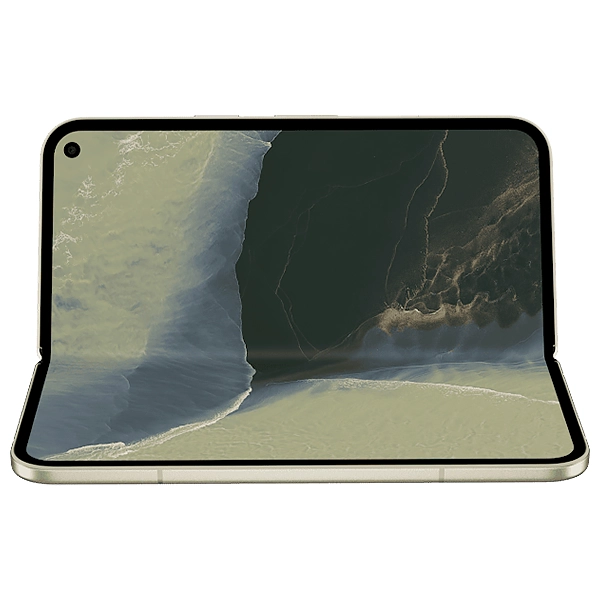
| Size Display Size refers to the diagonal measurement of the screen, typically measured in inches. Larger screens offer more immersive experiences for gaming, media, and multitasking, while smaller screens are more compact and easier to handle | 8.0 inches |
| Resolution Resolution refers to the number of pixels on the screen, usually shown as width x height (e.g., 1080 x 2400). PPI (Pixels Per Inch) density measures pixel concentration, with higher PPI offering sharper, more detailed images and text. | 2076 x 2152 pixels |
| Type Display Type refers to the screen technology: AMOLED & Super AMOLED are the top choice for vibrant colors, deep blacks, power efficiency, and faster refresh rates, ideal for gaming and media. OLED offers excellent color and contrast but tends to be pricier. IPS LCD provides good color accuracy and wide viewing angles, balancing price and quality. TFT is budget-friendly but lower in quality with less vibrant colors and narrower viewing angles. For the best overall display, AMOLED or Super AMOLED are typically the best options | Foldable LTPO OLED |
| Protection | Mohs level 5 |
| Aspect Ratio | 1:1 ratio |
| Pixel Density | ~374 |
| Screen & Body Ratio | ~88.4% |
| Multitouch | Yes |
| Cover display |
OLED, 120Hz, HDR, glass-ceramic glass 6.5 inches, 1080 x 2342 pixels 2000 nits (HBM), 3600 nits (peak) |
| More |
120Hz, HDR10+, 2000 nits (HBM), 3600 nits (peak) |
Body
| Folded | 155.2 x 76 x 10.1 mm |
| Unfolded | 155.2 x 150.4 x 5 mm |
| Build Material Build refers to the materials used in the phone's construction, such as a glass front and back for a sleek look, a titanium frame (Grade 5) for durability, or an aluminum body for a lightweight design. | Glass front (glass-ceramic glass) (folded), plastic front (unfolded), glass back (Gorilla Glass Victus 2), aluminum frame |
| Weight Weight refers to the mass of the phone, usually measured in grams (g) or ounces (oz). It helps you understand how heavy or light the phone feels in your hand. | 239 g (8.43 oz) |
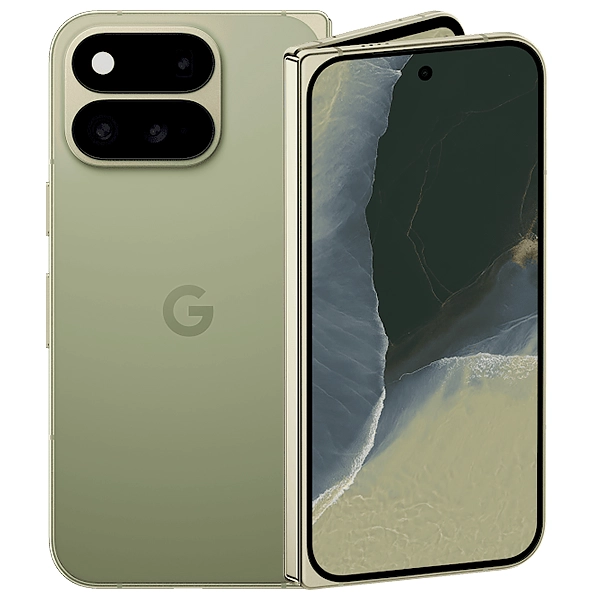
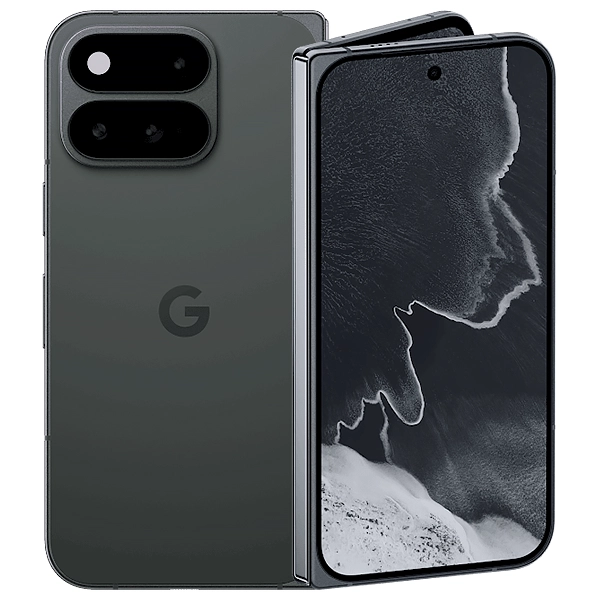
| Color | Obsidian, Olive |
| Models | GZDQ6 |
Performance
| OS | Android 17, up to 7 major OS updates |
| Chipset | Google Tensor G6 (3 nm) |
| CPU CPU (Central Processing Unit) mostly known as processors, CPU processes instructions in order to carry out certain functions that make your device operate properly. Processors are often described as the brain of computers, smartphones and tablets, Smartphones and tablets rely on processors to carry out their every task, Processors are an incredibly important factor in selecting any type of computing device, including your smartphone. | 7-core (1x4.1 GHz ARM C1-Ultra & 4x3.4 GHz ARM C1-Pro & 2x2.65 GHz ARM C1-Pro) |
| GPU GPU (Graphics Processing Unit) is a single-chip processor designed to rapidly manipulate and alter memory to accelerate the creation of images in a frame buffer intended for output to a display, This includes things such as lighting effects, object transformations, and 3D motion. | PowerVR C-Series CXTP-48-1536 |
Memory
| RAM | 16GB RAM |
| ROM ~ Internal | 256/512GB/1TB UFS 4.x |
| External Card Slot | No |
| Variant | 16GB 256GB / 16GB 512GB / 16GB 1TB |
Network
| SIM Type SIM Type refers to the type of SIM card used: Nano-SIM: The smallest and most common size in modern phones. eSIM: An embedded SIM that doesn’t require a physical card. Dual SIM: Allows two SIM cards for managing multiple networks. Triple SIM: Rare, supports three SIM cards in one device. Micro-SIM: Larger than Nano-SIM, found in older devices. | Nano-SIM + eSIM |
| Technology | GSM / HSPA / LTE / 5G |
| GPRS | |
| EDGE | |
| Speed | HSPA, LTE, 5G |
| 2G Network In this section you can see 2nd generation mobile data communication technology specifications. | GSM 850 / 900 / 1800 / 1900 |
| 3G Network | HSDPA 800 / 850 / 900 / 1700(AWS) / 1900 / 2100 |
| 4G Network | LTE |
| 5G Network | SA/NSA/Sub6/mmWave |
Primary Camera
| Camera Camera |
48 MP, f/1.7, 24mm (wide), 1/1.56", 1.0µm, dual pixel PDAF, OIS 10.8 MP, f/3.1, 112mm (telephoto), 1/3.2", dual pixel PDAF, OIS, 5x optical zoom 10.5 MP, f/2.2, 127˚ (ultrawide), 1/3.4", PDAF |
| Features | Multi-zone Laser AF, LED flash, Pixel Shift, Ultra-HDR, panorama, Best Take, Zoom Enhance |
| Video | 4K@24/30/60fps, 1080p@24/30/60/120/240fps, 10-bit HDR, gyro-EIS, OIS |
Selfie Camera
| Camera Camera |
10 MP, f/2.2, 23mm (wide), 1/3.94", PDAF Cover camera: 10 MP, f/2.2, 23mm (wide), 1/3.94", PDAF |
| Features | HDR, panorama |
| Video | 4K@30/60fps, 1080p@30/60fps |
Connectivity
| WLAN | Wi-Fi 802.11 a/b/g/n/ac/6e/7, tri-band |
| Bluetooth | 6.0, A2DP, LE, aptX HD |
| Positioning | GPS (L1+L5), GLONASS, GALILEO, BDS, QZSS, NavIC |
| USB | USB Type-C 3.2 |
| NFC | Yes |
| FM Radio | No |
| Infrared port | |
| Browser | HTML 5 |
| Java |
Sensors
| Fingerprint | Fingerprint (side-mounted), accelerometer, gyro, proximity, compass, barometer Ultra Wideband (UWB) support Satellite SOS service |
| Proximity Sensor | |
| Compass Sensor | |
| Accelerometer | |
| Light Sensor | |
| Gyroscope Sensor | |
| Color spectrum The color spectrum is a Sensor |
Sound
| Loudspeaker | Yes, with stereo speakers |
| 3.5 mm Audio Jack 3.5 mm Audio Jack is a popular and common audio output jack. | No |
Battery
| Battery Type Mobile phones run on various kinds of batteries There are four types of Mobile phones batteries. 1. Lithium Polymer (Li-Po), 2. Lithium-Ion (Li-Ion), 3. Nickel Metal Hydride, 4. Nickel Cadmium. In this section you see the battery type of the phone. | Non-removable Li-Po |
| Battery Capacity | 4806 mAh |
| Charging Time | 30W wired, PPS, 50% in 30 min |
| More |
25W wireless (magnetic), Qi2.2 Bypass charging |
More
| Extra Features | IP68 dust tight and water resistant (immersible up to 1.5m for 30 min) |
PROS
- 8.0-inch foldable LTPO OLED with 120Hz.
- up to 3,600 nits peak brightness..
- Powerful Google Tensor G6 (3nm) chipset.
- 16GB RAM with up to 1TB UFS 4.x storage.
- Android 17 with up to 7 major OS updates.
- Triple camera with 4K video recording.
CONS
- 239g weight makes it heavy.
- Very expensive.
- No 3.5mm headphone jack.
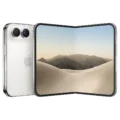
The Google Pixel 11 Pro Fold is a premium foldable smartphone designed for users who want a large-screen experience without giving up flagship smartphone functionality. Announced on August 12, 2026, the device is expected to be released on August 20, 2026. Its headline feature is an 8.0-inch foldable LTPO OLED display with a 120Hz refresh rate, HDR10+ support, and up to 3,600 nits peak brightness. The 6.5-inch cover display also supports 120Hz and up to 3,600 nits peak brightness, making both screens suitable for everyday use, gaming, streaming, and productivity.
Under the hood, the Pixel 11 Pro Fold is powered by Google’s Tensor G6 3nm chipset, paired with 16GB RAM and up to 1TB of UFS 4.x storage. It runs Android 17 and is promised up to seven major OS updates, which is a strong advantage for buyers planning to keep the phone for several years.
| Model | Google Pixel 11 Pro Fold |
| Expected Price | ৳2,40,000 BDT |
| Camera | 48MP 2160p |
| ROM | 256/512GB/1TB |
| RAM | 16GB RAM |
| Battery | 4806 mAh 30W |
Comments
Disclaimer Note
Disclaimer Note > We can not guarantee that the information on this page is 100% correct.